The Only Constant is Change

Archive for the ‘Uncategorized’ Category

The Effect of Arts Education on Academic Performance

The Effect of Arts Education on Academic Performance

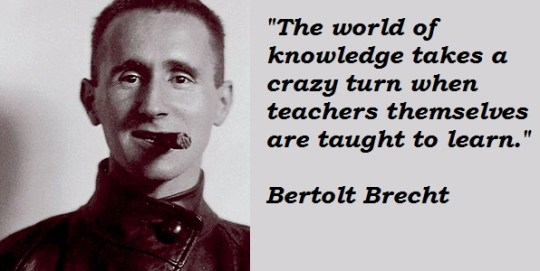
bertolt-brechts-quotes-3A 2006 report, Are our new students really ready to Work?, Business leaders’ acknowledgement the importance of “Basic Knowledge/Skills” to educating students who will eventually move into the future workforce and recognize those to include:

English Language (spoken);
Reading Comprehension;
Writing;
Mathematics;
Science;
Government/Economics;
Humanities/Arts;
Foreign Languages;
History/Geography.

However, employers interviewed in the study also value “Applied Skills” as critical to success… including:

Critical Thinking/Problem Solving:
Teamwork/Collaboration;
Leadership;
Creativity/Innovation;
Lifelong Learning/Self Direction;
Professionalism/Work Ethic, and Ethics/Social Responsibility.

In fact, employers in the survey indicated their belief that over the next five years, applied skills will surpass basic knowledge on the combined list of skills that respondents say will increase in importance—with Creativity/Innovation ranking among the top five.

Dr. Arnold Packer, Executive Director of the U.S. Labor Department’s Secretary Commission on Achieving Necessary Skills (SCANS) wrote “Arts Education for the 21st Century American Economy” for the American Council for the Arts 1994, a conference on citing ways in which the arts contributed to the “workplace know-how”. The US Department of Labor determined that 
experiences in the arts teach skills that can be transferred to the workplace, among them interpersonal skills such as teamwork and working with other cultures.

Knowledge of the arts enhances effective communication, and communication is more effective when it draws on the power of the arts to convey meaning. In the information age, ideas and information can profitably draw on visual, dramatic, musical, and bodily elements. An “artful approach” improves problem solving. High-performance firms strive for quality work and search for the kind of creative solutions that an arts education helps students understand and work toward.

Educating for the 21st Century Global Workforce

Historically, America has held the reputation for producing highly imaginative and innovative minds. In the creative as well as scientific and high tech industries. With new technology and global economy advanced industrial nations like India, China, and many European countries have begun producing high quality engineers, scientists, and technological innovators—and, at significantly lower operating costs.

The crucial question, posed by the American Management Association is, “Will U.S. companies be able to attract top talent from abroad in coming years? And, even if they can, will it be less expensive and more efficient to just create innovation facilities in other nations and utilize the talent there?” The answer? America must be able to do things other countries cannot.

In 2001 the U.S. government has responded to the education dilemma with No Child Left Behind (NCLB), which mandated arts as a core curriculum (but didn’t fund them), and in 2007 The America Competes Act (reauthorized by President Obama in 2010), which focuses on science, technology, engineering and math (STEM) subjects. So what’s the problem? While improved academic achievement is positive, schools are complying with the law by spending more time on the “required” (i.e., nationally tested) subjects, they are reducing instruction on other subjects by an average of 31 percent.

The results? Effectively, this narrows the skills taught in schools that, consequently, may not even be the most valuable for employers in the new economy. What are the experts saying? A tipping-point is potentially close at hand, with factors increasingly converging on the importance of the arts in workforce development, and in creating arts-rich educational systems that support it.

2006-2007 MetLife Foundation National Arts Forum Series suggested studying effective models for integrating disciplines, engaging legislative and policy, making entities to affect pro-arts change, and electing strong arts candidates to school boards. Why? The best employers the world over will be looking for the most competent, most creative and most innovative people on the face of the earth and will be willing to pay them top dollar for their services.
Daniel Pink argues that we have moved to a Conceptual Age in which “mastery of abilities that we have often undervalued and overlooked marks the fault line between who gets ahead and who falls behind.” Who is Daniel Pink you ask? Just another artist trying to get the world to pay attention to his importance? Far from it. Daniel Pink received a BA, with honors, from Northwestern University, where he was elected to Phi Beta Kappa, and a JD from Yale Law School. He wrote articles on business and technology that appear in many publications, including the New York Times, Harvard Business Review, Fast Company, and Wired, (where he is a contributing editor), has provided analysis of business trends on CNN, CNBC, ABC, NPR, and is an X-speech writer for Al Gore.

Daniel Pink also wrote, “A Whole New Mind: Why Right-Brainers will Rule the Future“. Daniel Pink’s book suggests that the abilities that matter most for this new economy are artistry, empathy, passion, seeing the big picture and the transcendent—right-brain skills that we have always associated with learning in the arts. Pink describes the six essential right-brain-directed aptitudes that creative thinkers should master:

Good Design;
Narrative;
Symphony;
Empathy;
Play;
Meaning.
Why? To be prepared for the jobs of the 21st Century.

Effects of General Education vs. Arts Education on Arts Participation

An analysis was made of:
the relationship between arts education and education,
the independent effect of each type of education on arts participation after taking the other into account, and
the contingent effects of education and arts education; that is, the effect of one depending on how much of the other one received. (AES)

The results?
Overall, education is generative
More education in the arts also shows higher levels of general education and vice versa. (AEP)

Independent Effects of Arts Education and Education on Arts Participation

So, what should students know or not know? James Catterall says, “When all is said and done, education is at least about preparation for effective living”. What does that mean?

Generally, more arts education or education (hence, arts/education) meant:
more arts consumption (attending, listening to, watching, or reading) and
more arts creating (writing, composing, drawing, painting).
Indeed, arts education had a much stronger impact than did overall educational attainment, even after taking personal background and socioeconomic status into account. (AEP)

Which came first….?

It could be that getting a solid arts education has a stronger effect on students who have a strong educational background in general, so that arts education simply adds on to the effect of other schooling. On the other hand it could be that arts education is more important for students with less overall education. Put another way: If schooling partially compensates for a lack of an education in the arts, then the specific influence of arts education may only show up for students who have had limited schooling.

But isn’t STEM the wave of the future?

What is the benefit of arts education?
Do we measure academic enhancement?
Do we measure esthetic value?
With NCLB do we really have time to measure?

Elliot Eisner.professor of Art and Education at the Stanford Graduate School of Education, and one of the United States’ leading academic minds wrote The Arts and the Creation of Mind to dispel the idea that the arts are somehow intellectually undemanding, emotive rather than reflective operations. “Most of the most complex and subtle forms of thinking take place when students have an opportunity either to work meaningfully on the creation of images – whether visual, choreographic, musical, literary, or poetic – or to scrutinize them appreciatively”.

Perception is, in the end, a cognitive event! “To be able to create a form of experience that can be regarded as aesthetic requires a mind that animates, or imaginative capacities, and that promotes our ability to undergo emotionally pervaded experience”.

What world will our students live in?

A world riddled with:
Ambiguities
Uncertainties
They’ll need to exercise judgment in the absence of rule
Feeling will be a source of information for making difficult choices

Can’t measure that!

But the arts can:
Develop thinking skills in the context of an art form
Develop expression and communication of distinctive forms of meaning – meaning that only artistic forms can convey
Develop the ability to embrace conflicting emotions (cognitive dissonance)

Jobs of the future will require people who love to learn. Do our students love learning? Children pursue activities that promote satisfaction. Experiencing the aesthetic in the context of intellectual and artistic work is a source of pleasure. Will students become lifelong learners if they find no pleasure in it?

There seems to be different answers to the natural inclination of people to learn, and it can be suggested in the new generational memes of Gen X, Gen Y, Gen Z and of course the older generation of Baby Boomers.

Meet the generations!

BABY BOOMERS (1943-1960’s)
The Baby Boomers are the generation that was born following World War II, generally from 1943 up to the early 1960s, a time that was marked by an increase in birth rates.
The term “baby boomer” is sometimes used in a cultural context. The baby boom has been described variously as a “shockwave”[24] and as “the pig in the python”.[25]
In general, baby boomers are associated with a rejection or redefinition of traditional values; however, many commentators have disputed the extent of that rejection, noting the widespread continuity of values with older and younger generations.
In Europe and North America boomers are widely associated with privilege, as many grew up in a time of affluence.[24]
One of the features of Boomers was that they tended to think of themselves as a special generation, very different from those that had come before them.

Generation X (born 1960s-1980)
What do you want from a job? Money, rise, promotion, office with a door, window, want ‘your’ job, respect
What do you want from the boss? Stop trying and making promises that can’t be delivered, want truth
If the job doesn’t deliver? Negotiate with you. I need you to … focus on work life balance (have young children and old parents). If don’t deliver will stay but will start looking elsewhere. Have to spend $ on them – talk is cheap

Generation Y (1980s to the early 2000s)
Pursue personal satisfaction
More entrepreneurial savvy and less concerned with permanence
Not as influenced by authority and role models
Peer group is important – learning how to operate in a group, connected to friends
More visual, kinesthetic learners who want to avoid information overload (especially print)
Not compartmentalized (partitioned) a mosaic of expectations – all parts of their lives are woven
Values and self esteem need to be met in a workplace and in their learning

Generation Z (2001-2021)
“Also known as generation 9/11 because generation z starts with everyone born between 2001-2021. It’s just in it’s infancy right as I type this, but this generation will face many things including: the aftermath of the war in Iraq, the effects of the decisions made TODAY about politics, and will be on the edge of the next predicted revolution.” (Urban Dictionary).
Most of the traits that will define this generation have yet to emerge. However, many are highly connected, having had lifelong use of communication and media technology like the World Wide Web, instant messaging, text messaging, MP3 players, mobile phones and tablets;[11] this earned them the nickname “digital native”.
Who knows????

So we have a variety of generation that are motivated by a variety of “carrots”. We live in a world that is changing fast, so the jobs of the future are not as easy to predict. Today computer programmers are in demand, however the ability to speak between disciplines has required a unique “storytelling” ability be present for new programmers; ie: data scientists. “Data scientists’ most basic, universal skill is the ability to write code. This may be less true in five years’ time, when many more people will have the title “data scientist” on their business cards. More enduring will be the need for data scientists to communicate in language that all their stakeholders understand—and to demonstrate the special skills involved in storytelling with data, whether verbally, visually, or—ideally—both.” Communicating Science is a major created with the help of Alan Alda through at Stony Brook University because Mr. Alda was, “convinced that many researchers have wonderful stories to tell, but some need help in telling them.”

Everything done with passion, innovation and creativity is an art form. Education in the arts provides a common language between disciplines. Our time has come. Rigorous arts education is a core need for jobs of the 21st century. The institutions that recognize this will thrive as we continue our journey towards innovation.

METICULOUS IBSEN


Repression_Breeds_Obsession

In many plays the stage directions simply give us a record of how a play was blocked the first time it was produced, in a particular theater, on a particular set. This is not the case with Henrick Ibsen as he writes Hedda Gabler. The stage directions are vital to understand the characters and the plot. Ibsen painstakingly sets the stage, props, furniture, and portraits to symbolize the dynamics and actions that take place. The entire action of the play, Hedda Gabler, takes place in the drawing room of a house in approximately a day and a half. There is a smaller interior room, which is just off, but able to be viewed during most of the play. Only curtains separate this room from us at all times. Although some action takes place outside of the house, everything that Hedda experiences happens in these two rooms. In this essay I will show how Ibsen uses symbolism in specific stage directions and juxtaposition of the two rooms to define the contrast between the public, “social” face Hedda presents to the world and the “private” interior face she keeps carefully guarded.

First Ibsen describes the set as “a large, attractively furnished drawing room, decorated in dark colors” (Jacobus 697). The large room symbolizes “society”, specifically the society that Hedda is in during the 1800’s, an upper class society dominated by men. Notice the room is “large” and “decorated in dark colors” which suggest the colors which might be used in a men’s club. The room is furnished with “a wide, dark porcelain stove (not one for cooking but for heating), a high-backed armchair, a cushioned footstool and two stools without back or arms” which is typically furniture that suggests a strong male influence. There is a “settee with a small round table” for entertaining guests and “a piano”, a necessity for every cultured home. During the first scene it is brought to our attention that Berta has “taken all the slipcovers off the furniture” (698) at the request of Hedda. This sets in our mind the fact that Hedda comes from a class of people who use luxurious furniture daily rather then saving it for a special occasion. It is clear we are in a male- dominated, socially conscious, upper class world.

Next, Ibsen goes on to say that there is “a wide doorway with curtains drawn back” which “opens into a smaller room in the same style as the drawing room.” (697) This is symbolic of Hedda’s place in the world, a much smaller space, dominated by the larger male presence. Notice that the smaller room is “in the same style” as the larger room, symbolizing that although Hedda is a women, and therefore much less important, she still reflects the heritage of the much more important males. Ibsen goes on to describe the furniture of the inner room as “a sofa, a table, and a couple of chairs” and most notably hanging above the sofa “a handsome, elderly man in a general’s uniform.” This is the portrait of Hedda’s father and it dominates the set, as does the General in Hedda’s life. There is also a “hanging lamp with an opalescent glass shade” which suggests an antique and brings to mind the concept of heritage. It is important to note that this is the Tesman household and yet Mr. Tesman is allowing the oversized portrait of the General to dominate his house. This is symbolic of the fact that Hedda is considered a valuable possession, not for her own attributes, but because of the status her name brings to the Tesman family. This room symbolizes Hedda’s existence, a lesser important space dominated by the presence of her heritage, specifically her father, the General.

Just as the action of the play is confined to these two rooms, so is Hedda’s life confined to limited ideas and opportunities available to her due to social conventions. In the drawing room, or public space, Hedda is “free” to enjoy what her husband can provide for her while he basks in the glow of Hedda’s ever-present family heritage. In her private space she maintains what is left of her illusion of power, her heritage represented by the portrait, the guns and the piano. As the play progresses and Hedda’s prospects shrink (due to Tesman’s job prospects) she retreats to the smaller room. This is symbolized specifically at the beginning of Act II with the movement of the piano which has “been moved into her room and an elegant little writing table with a bookcase” (706) moved in its place in the drawing room. The writing table is now the focus, emphasizing Tesman’s duty to provide for Hedda through his writing.

Next, props also play a prominent role in the symbolism of the play. It is important to note that the General’s guns have also been moved into the drawing room at the opening of Act II. The open pistol case lies on the writing table and Hedda is holding one of her father’s pistols and loading it with ammunition. The pistols are clearly a phallic image of male power, which Hedda lacks only in physique. Like Hedda, the pistols project a cold exterior housing a fiery inner danger. It is no accident that the gun case is on the writing table, symbolizing Hedda’s growing anger and resentment at being at the mercy of her ineffectual husband. Hedda stands alone in the drawing room, loading the pistol, symbolizing her yearning to be able to publicly take matters into her own hands.

It is important to note that at the top of Act III we find that the curtains have been drawn to Hedda’s room for the first time in the show. (717) As Hedda sleeps, harboring the secret that she has possession of Lovborg’s manuscript and has instigated his suicide, the curtains to her private room are closed, protecting her private world and indicating that there is something hidden. The use of lighting is also important here. At the top of the show Hedda is annoyed that “That maid has left the door open – and the sunlight’s just flooding in” (700) as she prefers a softer light, symbolizing the lack of power she feels. Now in the third act, Hedda wakes feeling energized by her power over Lovborg and “draws the curtains back. Bright daylight streams into the room” (718) symbolizing Hedda’s power, now strong through her manipulations of Lovborg and Tesman. She also goes to the writing table, the symbol of Lovborg & her husband’s work, gets a mirror and check’s her image. (718) This is a chilling image of Hedda’s cold satisfaction of having bested the men.

Finally, it is important to note specific times that Ibsen moves the action to Hedda’s private space as well as specific times he keeps the action in the larger drawing room. First, Brack propositions Hedda, Hedda questions Mrs. Elvsted to obtain information and Lovborg and Hedda speak of their past relations, all in the drawing room. This symbolically highlights the internal conflict Hedda experiences between her social self and her private self. In the drawing room we are reminded of the social constraints that are imposed on Hedda at all times. Next, when Tesman and Brackman “go into the inner room, sit down, drink punch, smoke cigarettes and talk animatedly” (712) they do so with the backdrop of the General. This emphasizes how Tesman uses the heightened social standing he enjoys as a result of his marriage to the General’s daughter. Next, “Tesman and Mrs. Elvsted go into the inner room” (728) to re-work Lovborg’s manuscript. This is a stunning intrusion and new disrespect or Hedda’s private world and her worth. They later come back into the drawing room complaining that “it’s nearly impossible to see in there under that overhead lamp” and asking if it would “be all right if we used your table for a while?” (728) Apparently Hedda’s light did not burn brightly enough for Tesman anymore. Finally, “Hedda goes into the inner room, pulling the curtains closed after her… plays a wild dance melody on the piano” and “a shot is heard within”. (730) Ibsen has placed Hedda in her inner room, with all the vestiges of her heritage while she exerts her only power and takes her own life.

The two rooms of the Tesman house stand in stark contrast. While the social world or the drawing room may be larger, the smaller room of Hedda’s private world looms prominently, making us aware of her internal conflict. This is achieved by Ibsen’s masterful use of sets, props, lighting and set decoration. Ibsen did not rely on dialogue and action alone, but added the important visual dimension to define the contrast between the public, “social” world Hedda lived in to the “private” interior world she so carefully guarded.

Not a Beckett fan… Or am I? Endgame, Absurd or Meaningful?

I read the play, Endgame, by Samuel Beckett. I read it again. I rented the video thinking perhaps I missed something, but I hadn’t. I hit the internet feeling like an idiot and cursing Mr. Beckett for pulling off one of the biggest “Emperor’s New Clothes” scams ever. Needless to say, I was wrong. To the novice ‘Theater of the Absurd’ reader, Beckett’s Endgame reads like a long, drawn-out nightmare. To the untrained mind it is gibberish. However, much like dream analysis, Beckett’s themes, motifs and symbols can be deciphered. After reading several articles analyzing Endgame, I have decided that there is meaning to Beckett’s madness. Endgame explores the ideas of beginnings and endings, and the concept that existence, whether pleasant or not, is cyclical.

First, let me address the opening stage directions (Beckett p.1239). It describes a bare interior, gray light, two small windows at ceiling level with curtains drawn, suggesting the eyes of a skeleton, with the gray aura of death overshadowing everything. Like a good little researcher I turn to SparkNotes (ha!) who suggests that “the characters represent the brain and memory. Thus the entire stage serves as a metaphor for an aging mind.” Hamm’s parents “live” in ashbins. The parents are a metaphor for family heritage and the thinking and living patterns that they pass down; the trashcans for the idea that this is something no longer useful, ready to be thrown out, but still ever-present. There is a picture hanging near the front door, its face to the wall. Center, in an armchair on casters and covered in an old sheet is the main character, Hamm. The ashbins are also covered with a sheet. These images suggest mourning: curtains drawn, sheets covering both Hamm and the cans, and picture turned to the wall. Standing motionless near the door, eyes fixed on Hamm, is Clov, perhaps a mourner, very red-faced. This entire picture is held in a brief tableau to set the scene for endings, represented in death and mourning.
Next, the proof is in the title itself: Endgames. The “endgame” of chess is the series of moves at the end of the game, one whose outcome is usually decided before the formality of the endgame occurs” (Wayne). Paul Davies says, “Based on the metaphor of chess, the title and the play’s content point towards the process of ending, a process undergone in the knowledge that the predicament is issueless, with the likelihood not of winning or losing, but of stalemate.” He goes on to say that in a 1967 interview, Beckett stated that the main character Hamm “is a king in a chess-game lost from the start. From the start he knows he is making loud senseless moves.” This is supported by the fact that Hamm is sitting on his throne during the entire play. Being the king, he is the most important and ironically the least powerful and most ineffectual player in the game. Hamm’s existence is completely dependent on the actions and movements of others. Clov has been described as the Knight and Nagg and Nell as ineffectual and restricted Pawns. As in chess, the game is over when checkmate occurs. Checkmate is a phrase derived from the Arabic language meaning “the king is dead”. Again, we are left with the theme of endings.
In keeping with the concept that existence is cyclical, it is interesting to observe that Beckett intertwines images of new life or beginnings throughout the play. First, there is a time when Hamm tells Clov to “Look at the ocean” (Beckett p.1247). The ocean is the symbol for the birthplace of all life, or beginnings. When Clov looks at the ocean he sees that “The light has sunk… all gone… nothing on the horizon.” Again, the idea of endings. Shortly after this there is an exchange where Clov exclaims, “I have a flea!” Hamm replies, “A flea! Are there still fleas?” Clov: “On me there’s one.” Hamm: “But humanity might start from there all over again! Catch him, for the love of God!” (1249). The flea represents renewed life and Clov immediately gets insecticide to kill or “end” it. Then Hamm has a sudden urge, “Let’s go from here, the two of us! South! You can make a raft and the currents will carry us away, far away, to other … mammals!” (1250). The implication is clear, with other mammals new life can begin again. Immediately following is an exchange which emphasizes the desperation Hamm feels in his last days, “Infinite emptiness will be all around you, all the resurrected dead of all the ages wouldn’t fill it, and there you’ll be like a little bit of grit in the middle of the steppe… Why don’t you finish us?” With the hope of new life is the immediate longing for the end. The most jarring image of renewal and death comes in Hamm’s monologue “I once knew a madman who thought the end of the world had come. He was a painter – and engraver. I had a great fondness for him. I used to go and see him, in the asylum. I’d take him by the hand and drag him to the window. Look! The sails of the herring fleet! All that loveliness! He’d snatch away his hand and go back into his corner. Appalled. All he had seen was ashes.” (1252) A painter (creator) thinks the end of the world has come. In the asylum (sickness and death) Hamm drag’s him to the window (outside world where life is constantly renewing itself), but all the painter sees is ashes (endings). A constant cycle; a beginning followed by an ending, followed by a beginning, and so on. Later there is a living rat, again a symbol for new life or beginnings, and Hamm exclaims, “And you haven’t exterminated him?” (1257) symbolizing the desire for death or endings. Lastly is the image of the boy. Clov exclaims, “Looks like a small boy!… A potential procreator?” Hamm replies, “If he exists he’ll die there or he’ll come here…. It’s the end.” (1263). The boy, or creation, will eventually end, and we know that the implication is that the cycle will continue to repeat.
My final proof of the theme of beginnings, endings and the concept that existence is cyclical lies in the final tableau of the play. Hamm is center in his chair with the handkerchief over his face and Clov stands by the door with his eyes fixed on Hamm. This is almost exactly the same tableau we are introduced to at the opening of the play. However the play begins with the lines, “Finished, it’s finished, nearly finished, it must be nearly finished” (1239) and the play ends with the line, “You … remain.” (1266). All of this implies a continuation. We are left with the expectation that the cycle will pick up again at the beginning and work through to the end, which become, yet again, a new beginning.

Endgame is a play that “portrays a universe which is nearing its end but which could continue repeating itself” (Fajardo p. 2). The story is told through a string of seemingly nonsensical exchanges, rich with symbolic meaning and eliciting powerful images. Do I understand this play? No. But, very much like a dream I try to understand, I know that I have begun to grasp some of the ideas that Endgame has to offer. So, I will continue to explore the ideas of beginnings and endings and the concept that existence, whether pleasant or not, is cyclical.

Works Cited:
The American Heritage® Dictionary of the English Language, Fourth Edition copyright ©2000 by Houghton Mifflin Company. Updated in 2003. Published by Houghton Mifflin Company. All rights reserved. 24 Nov. 2005 http://www.thefreedictionary.com/checkmate
Davies, Paul, University of Ulster at Coleraine. “Endgame.” The Literary Encyclopedia.
8 Jan. 2001. The Literary Dictionary Company. 23 November 2005. http://www.litencyc.com/php/sworks.php?rec=true&UID=5366

Dr. Fajardo-Acosta, Dr. Fidel Fajardo-Acosta’s World Literature Website,
© 2001, 2002 by Fidel Fajardo-Acosta, all rights reserved
http://www.fajardo-acosta.com/worldlit/beckett/endgame.htm

Jacobus, Lee A., Beckett, Samuel, Endgame, The Bedford Intro to Drama 4th Edition, Boston, Ma: Bedford/ST. Martin’s

Wayne, Derek. SparkNotes on Endgame. 24 Nov. 2005 http://www.sparknotes.com/drama/endgame/

Obesity: Facts, Stigmas, Solutions

Obesity… “You did this to yourself.” “Look at that person; he’s big as a house.” “Can you spell exercise?” “With a little self control you could take off a few pounds.” “Why don’t you put down the potato and get off the couch!” Look at your own views and preconceptions about obesity and I’m sure you can add a few sentences to this list. It can easily be said that there are more misunderstandings about obesity than about any other major health epidemic. Faulty or incomplete weight loss information is introduced on a daily basis by a variety of “experts”, with offerings of yet another fad diet, each with a new array of marketable diet products. And yet more then one-half of American adults are overweight and about half of those could be considered obese.
Up until the early 1980s, Americans’ body sizes had remained relatively stable, growing by just a third of a pound between 1962 and 1980. The average adult male weighed 174 pounds, and the typical woman was 145 pounds. But as society sped up, eating habits changed. Larger portions of “cheaper, fattier food; more dual-income households that scarfed more restaurant grub and cooked less at home; and suburban sprawl that turned formerly active urban dwellers into sedentary drivers and couch potatoes” (Crawford). Obesity was on the rise.
Obesity has become a national epidemic during the past twenty years, with nearly one-third of all adults being classified as obese, according to the American Medical Association. The Center for Disease Control shows a 30% increase in obesity adults 20 years of age and older (a body mass index (BMI) of 30 or greater), and a 16% increase among children and teens (defined as BMI-for-age at or above the 95th percentile of the CDC Growth Charts). Over 60 million American adults and over 9 million American young people are considered overweight. The CDC has made this issue a priority and pledged to reduce the prevalence of obesity among adults to less than 15% by the year 2010, however “current data indicate that the situation is worsening rather than improving” (CDC).
The obesity problem seems to affect women (33 percent) more than men (28 percent); non-Hispanic black women (49 percent) more then Mexican-American women (38 percent) and non-Hispanic white women a little less (31 percent). Men are affected at the same numbers regardless of race or ethnicity. Teens ages 12-19 fare a bit better, with non-Hispanic blacks (21 percent), Mexican-American adolescents (23 percent), and non-Hispanic white adolescents (14 percent). The trend for ever increasing numbers in children is the most disturbing. Children ages 6-11 show obesity rates of 22% for Mexican-American children, 20% for non-Hispanic black children, and 14% for non-Hispanic white children, with an additional 15% of children and teens ages 6 to 19 considered at risk for becoming overweight, showing a BMI-for-age between the 85th and 95th percentiles (NCHS). California’s numbers are even bleaker, “with numbers rivaling the tobacco problem. The prevalence of overweight in Californians has increased from 38 percent in 1984 to 57 percent in 2003. All gender, age, and race/ethnic groups have shown an increase during the past decade.  Californians below the poverty level are disproportionately affected” (COPI).
Why should obesity be such a concern? Besides being considered “unattractive” in our society which could result in stigmatism, discrimination and isolation, obesity brings with it an increase in other health conditions and diseases. Some of these concerns include hypertension, dyslipidemia, type 2 diabetes, coronary heart disease, stroke, gallbladder disease, osteoarthritis, sleep apnea and respiratory problems, and some cancers such as endometrial, breast, and colon cancer. (CDC). “Poor diet and physical inactivity are the second leading causes of death and disability, resulting in nearly 30,000 deaths each year in California” (COPI). And then there is the issue of eating disorders which can be life threatening.
Obesity is a complicated issue and we are looking for a simple solution. Many diet professionals’ simple answer to the growing epidemic of obesity has been to recommend more exercise and a balanced diet. This fails to take into account other factors that can affect weight loss, and fosters an incomplete understanding of the biological and hormonal changes that underlie obesity among aging adults. The fact is that as we age, we undergo physiological changes that encourage weight gain. These include hormonal changes and alterations in the way our bodies process nutrients.
With the best information available is seems that there is no single cause of obesity. Some of the most popular theories indicate that genetic predisposition, environmental factors, and behavior are the most common causes. It is clear that overeating and lack of exercise are critical causes of weight gain and obesity, but many other factors can affect body weight and composition. Hormonal changes including a deficiency of testosterone or an overproduction of estrogen can contribute to abdominal obesity. As women age progesterone and estrogen levels decrease causing imbalances that can lead to central body fat accumulation. DHEA hormones decrease as we age, which affect metabolism rates. All of these factors can lead to insulin resistance, also known as metabolic syndrome or Syndrome X, which can occur as we age, and are associated with obesity. And of course there is the issue of emotional hunger which may be responsible for 75 percent of overeating.
While it is true that Americans are consuming more calories than ever before, it is also true that we are performing less physical activity. Dr. Marion Nestle, Professor and Chair of the Department of Nutrition and Food Studies at New York University (NYU) states that, “The ubiquity of fast food outlets and soda vending machines, the huge increase in portion sizes at restaurants, the decline in school physical education programs, and the many hours spent on the Internet and watching television are all contributing to the obesity epidemic.” Dr. Michael F. Jacobson, Executive Director of the Center for Science in the Public Interest states that “Public health officials need to recognize that obesity is a natural consequence of an auto-oriented, TV-watching lifestyle. To prevent obesity, we need to change our lifestyle, not just admonish people to eat less. We need national leadership to get us out of the drive-thru and off the couch if we want to stop the epidemic of obesity.” (CSPI).
California Obesity Prevention Initiative states that “The worldwide spread of obesity has been attributed to complex, powerful societal forces that encourage eating too many high calorie foods, getting too little physical activity, and acquiring too much body weight over time.” This makes for happy marketing companies who push “large portions of high calorie foods with little nutritional value” which are made ever present choices for our fast moving society, making it inconvenient for people to maintain a healthy diet.
Technology has decreased the extent of physical activity in most workplaces, in daily living, for transportation, and during leisure. Renewed emphasis on academic achievement, nationwide budget cuts in the educational system and newly imposed safety concerns have reduced the time and space available for active play as well as for structured physical education. Long workdays and single parent households limit time for physical activity, and safety concerns, poor community design, and urban sprawl discourage walking, bicycling, and recreation in many neighborhoods. Time spent watching television plays an important role in adult, adolescent and childhood obesity.
Some childhood factors occurring very early or for brief periods in life contribute to obesity later in life. These include high birth weight from uncontrolled diabetes, low birth weight, and lack of breastfeeding.  Children breastfed at any time are 15% to 25% less likely to become overweight, while children breastfed 6 months or longer are 20% to 40% less likely” (COPI).
Long term dieting is a newly recognized factor in the growing obesity rates. Michael Sponagle sites a University of Toronto study that found that “long-term dieters have less ability to recognize subtle physical hunger cues and tend to respond to hunger only when it has reached ravenous proportions. Additionally, when diet devotees did eat, they couldn’t tell when they were experiencing subtle feelings of fullness”. Sponagle cites a Herman and Polivy study that suggests a zone of “biological indifference,” when eating-or not eating-becomes controlled by outside factors such as time of day, thoughts and feelings, rather than the body”. (Sponagle)
What is in your genes plays a major role in the propensity toward obesity, according to a study from an international team of researchers that included scientists from the Boston University School of Medicine and the Harvard School of Public Health in the Framingham Heart Study. A new technique was used that studied thousands of genetic fragments to determine whether there were any common genetic links that occurred in people with obesity. The study found that there are common genetic traits, but as yet haven’t determined how they relate to obesity. Michael Christman, an author of the study and chairman of BU’s department of genetics and genomics, said that, “What it says is that obesity is better viewed as a medical condition like heart disease, and if someone has heart disease or cancer it’s not generally considered their fault. But if they’re obese, it generally is.” Further research looks hopeful and could eventually lead to the development of drugs that could fight the condition. (Smith) Other studies published in the New England Journal of Medicine that look promising have suggested that “obesity is a medical condition that can’t be solved by willpower alone”. Studies on severely obese adults have discovered that some have a mutated gene called melanocortin 4, and “of that group, 100 percent were binge eaters” (Sponagle). Another report finds that “Researchers at Boston University (found) a genetic link to obesity that seems to run in families, which could lead to a genetic treatment…” (Taylor). All these discoveries look promising for future treatments in the battle against obesity.
Emotional eating is a cause of over consumption of calories, which can lead to obesity, and is encouraged in our culture. Food can be used to comfort, to celebrate, to show love, to compensate for tiredness or pain, to calm and to provide pleasure. Emotional eating can be a substitute for dealing with underlying issues which could be causing emotional distress such as loneliness, boredom, sadness, anxiety, anger or just generally feeling lost. This cultural food nurturing is passed along to our children as we use food to comfort children, leading to a sort of “self-medication through food” in later teen and adult years. Add to this the possible addictive qualities that are being found in certain foods such as chocolate and it is easy to see how food becomes a panacea for what ails you. Also being investigated is the possibility that “sweet and foods might actually alleviate feelings of anxiety” which suggest that certain foods can lead to “nonphysical hunger” (Sponagle). Making normal eating tougher still is the typical North American lifestyle, which exists in a constant state of stress and chaos. No longer is the typical evening spent sitting down to dinner, but rather eating on the run, eating at our desks, eating while we multi-task, or watch TV, disconnecting us from our natural hunger cues.
Dr. Oliver-Pyatt also blames chronic dieting itself for pushing us to eat when we’re not physically hungry. “Restricting food choices while dieting leads to compulsivity, due to deprivation. Telling yourself you can’t have something sets you up for failure and creates a stronger psychological pull to those so-called bad foods. If you want to lose weight, you have to stop dieting. My patients look at me in horror when I say this, but it’s true.” (Sponagle) Nutritionists suggest that cutting calories, meals, food groups or “eating only when hungry” sets the body up to enter a sort of “starvation mode” where any calories taken in will be stored as fat, rather then used to build and maintain healthy cells and energy.
Some of the medical issues that can result in weight gain include hypothyroidism, insulin resistance, which can lead to metabolic syndrome (aka Syndrome X), and hormonal changes in men and women.

Hypothyroidism is caused by a lack of thyroid hormone and is connected to weight gain, as well as dry hair and skin, fatigue, and sluggishness. Thyroid hormone is produced in the thyroid gland and is the master metabolic control mechanism. One of the first tests that should be performed on an overweight person is a simple blood test that can check thyroid levels to make sure they aren’t lacking thyroid hormone. A simple prescription can supplement the body and promote healing.

Insulin resistance is an impaired metabolic response to our body’s own insulin. This can cause the individual muscles cells to fail to recognize that they need to take in the available glucose, which in turn causes the pancreas to release more insulin, making the blood insulin levels chronically high. This can cause the fat cells to hoard their energy, making it difficult to lose weight. This disorder is associated with obesity, hypertension, abnormal triglycerides, glucose intolerance (syndrome ‘X”) and Type 2 diabetes mellitus. This condition can go unrecognized and undiagnosed causing metabolic damage which can lead to Type 2 diabetes. “Insulin resistant diabetics are 2-5 times more likely to die from heart attack or stroke than are non diabetics” (Jelovsek).

Risk factors for insulin resistance are similar to those for developing diabetes and include a family history of type 2 diabetes, high blood pressure, central obesity, body mass index over 27, a low HDL level or elevated triglycerides, atherosclerotic or coronary heart disease, polycystic ovarian syndrome, a history of gestational diabetes in pregnancy, and darkened skin changes in the neck, auxiliary and/or breast folds consistent with acanthosis nigracans. Additionally, insulin resistance may be worsened by reduced physical activity, aging, tobacco smoking, or drugs such as diuretics, certain anti-hypertensives, or steroids. Insulin resistance is diagnosed through a test called the hyperinsulinemic euglycemic clamp study in which insulin and glucose is infused intravenously at several different doses to see what levels of insulin control different levels of glucose. The main reason to diagnose insulin resistance is to go further on to look for Type 2 diabetes. (Jelovsek)

Metabolic syndrome is characterized by a group of metabolic risk factors including “abdominal obesity, atherogenic dyslipidemia (high triglycerides, low HDL cholesterol and high LDL cholesterol — that foster plaque buildups in artery walls), elevated blood pressure, insulin resistance or glucose intolerance, prothrombotic state, and proinflammatory state (e.g., elevated C-reactive protein in the blood). Other conditions associated with the syndrome include physical inactivity, aging, hormonal imbalance and genetic predisposition” (AHA). Metabolic syndrome increases the risk of coronary heart disease and other diseases related to plaque buildups in artery walls such as stroke and peripheral vascular disease, and type 2 diabetes. It is estimated that over 50 million Americans as metabolic syndrome has become increasingly common in the United States.
Since there are no well-accepted criteria for diagnosing metabolic syndrome, the American Heart Association and the National Heart, Lung, and Blood Institute recommend that the metabolic syndrome be identified as the presence of three or more of these components: elevated waist circumference, elevated triglycerides, reduced HDL (“good” cholesterol), elevated blood pressure, or elevated fasting glucose.
AHA Recommendations for Managing the Metabolic Syndrome include weight loss to achieve a desirable weight (BMI less than 25 kg/m2), increased physical activity, with a goal of at least 30 minutes of moderate-intensity activity on most days of the week, and healthy eating habits that include reduced intake of saturated fat, trans fat and cholesterol” (AHA) with the primary goal of reducing the risk for cardiovascular disease and type 2 diabetes.
Hormonal changes in men can lead to gaining weight around the middle, a medical condition called “abdominal obesity.” This happens because as men age, their levels of free testosterone decline, and levels of estrogen and insulin increase which in turn converts their testosterone into estradiol, a form of estrogen. The remaining testosterone is not biologically active and can lead to central obesity. This sort of fat accumulation greatly increases the risk of cardiovascular and other diseases.
Testosterone replacement therapy can restore the level of free testosterone levels of a much younger man, which can reverse the conversion of the testosterone into estradiol. Clinical studies have shown that testosterone replacement therapy can provide a variety of benefits including decreased middle abdomen, decreased blood pressure, a decrease in plasma insulin and an increase in glucose disposal (suggesting improved insulin sensitivity) improved sexual function after testosterone therapy (Obesity Online reference, Boyanov et al 2003).
Hormonal changes in women appear to lead to excess body fat, although the relationship between testosterone, estrogens, and progesterone is somewhat more complicated. As women age, levels of progesterone and all estrogens (including estriol, estradiol, and estrone) decline. Progesterone declines much more rapidly than do the estrogens, leading to “estrogen dominance” which “may play a pivotal role in the dynamics of metabolic obesity and visceral fat accumulation in aging women” (Obesity Online reference).
Testosterone and estrogen are not the only hormones implicated in weight gain. Low levels of DHEA (dehydroepiandrosterone), a steroid hormone, have also been linked to increased weight gain. Virtually everyone over age 35 experiences a significant reduction in DHEA. Studies suggest that supplementing with DHEA produces beneficial body composition changes including decreased abdominal obesity and improved insulin action. (Obesity Online reference, Villareal et al 2000; Villareal et al 2004).
What can be done to combat the Obesity Epidemic? Let’s begin with diet and exercise. Studies show that the best eating recommendations includes no dieting! A balanced diet including complete proteins, whole grains, fresh fruits and vegetables and healthy fats are the only solution to a stable weight. Feeding the body to maintain, renew and build the cellular structure is necessary and should be taken in regular 3-4 hour increments in order to maintain stable insulin and blood glucose levels, which in turn will make the nutrients available to the cells to maintain a healthy cellular mechanism. Exercise is equally important, however should be done to maintain health. Studies have shown that “over exercise” can be as damaging as “under exercise”, as it subjects the body to a constant break down of cellular structure that can be difficult to maintain healthy maintenance of cell, muscles tissue and glucose levels. Exercise should include cardio exercise as well as weight baring exercise to encourage muscle maintenance.

Education on a national level can help encourage new major governmental and societal changes to reduce the prevalence of obesity. In a Public Health Reports, nutrition professor Marion Nestle and nutrition activist Michael F. Jacobson suggest specific recommendations including “mounting large scale mass-media campaigns to promote healthier diets and physical activity; requiring chain restaurants to provide information about calorie content on menus or menu boards; designating more downtown areas as pedestrian malls and automobile-free zones; and having health insurance companies pay for effective weight-loss programs. (CSPI). Organizations are coming together to encourage the U.S. Department of Health and Human Services and the U.S. Department of Agriculture to emphasize, at their upcoming (May 30 – 31) National Nutrition Summit, “changes in government policies and corporate practices, including a ban in schools on the sale of soft drinks, candy bars, and other foods high in calories, fat, or sugar” (CSPI).
They go on to explain that these actions are necessary if the country is to reverse the increasing weight trends.
Bariatric surgery can be a solution for people who are morbidly obese, as diet and exercise alone don’t work in the long term. Morbid obesity is a very specific kind of obesity, and it’s determined by a body mass index (BMI) of 40 or greater, or a BMI that is higher than 35m, in addition to other serious health problems such as diabetes and high blood pressure. Bariatric surgery includes several surgical procedures, including gastric bypass that is expected to lose a person’s excess body weight to about 60-70%. (Raftopoulos). In addition to losing weight, many people who undergo gastric bypass see a significant improvement in other serious health problems, including hypertension, sleep apnea, heart problems, osteoarthritis, and high cholesterol levels, and diabetes (both type 1 and type 2).
Emotional eating requires a different approach which usually includes some type of therapy. Psychiatric counseling can help a person with emotional hunger, which has been estimated to account for 75 percent of overeating. “When emotional hunger overshadows physical hunger, our ability to hear what the body is saying erodes. And that’s when we can find ourselves in the middle of a complicated love/hate relationship with food” (Sponagle). Studies concerning the chemical processes which occur between appetite and satiety have shown that the “complex system controls the signals that start and stop the urge to eat and how food is processed in the body. The system works just fine most of the time, but some conditions (bulimia, anorexia nervosa and obesity) cause it to behave abnormally. Ironically, habitual dieting can throw a wrench into our well-oiled eating machinery”. (Sponagle) Therapy can help address issues behind emotional eating habits and address any medical concerns which may be necessary to treat in order for long term changes to be implemented.
Physical Education Programs need to be encouraged and/or expanded. Data from the 2003 California Department of Education FITNESSGRAM reveals that “out of children in grades five, seven, and nine only 23 percent of the students tested in grade five, 27.1 percent in grade seven, and 24.1 percent in grade nine met the minimum fitness standards” (COPI) which measured major fitness areas including aerobic capacity, body composition, abdominal strength and endurance, trunk strength and flexibility, upper body strength and endurance, and overall flexibility. “National and state surveys indicate that rates of overweight and obesity began to rise in the late 1980’s, accelerated in the 1990’s, and as yet in this decade show no signs of slowing. Of the nation’s ten Leading Health Indicators for Healthy People 2010, only overweight and obesity are moving strongly in the wrong direction” (COPI).
Some of the issues that prevent America from addressing the obesity problem include time management, social stigmas, and new marketing trends.
Time management is a difficult issue to address in our society today. With most households needing duel incomes or jobs in order to maintain our perceived or real standard of living needs, there seems little time to devote to enhancing the quality of life issues, like health. When single parents, dual income parents, or the single career bound upwardly mobile individuals come home after a ten hour day, the last thing on their minds is exercise, good eating and some soothing relaxation before going to bed at a descent hour (in order to assure a good night’s sleep). No, it’s more like rushing home and picking up some pre-made meal on the way to shove in front of the kids in order to rush off to homework, housework, continuing education work, PTA meetings, work brought home from the office work, or the second job. Exercise? Taking time for a quality meal? Bubble bath, reading, soothing music, or a nice leisurely chat with a friend? In your dreams.
The pace of everyday life has become a frantic dance and the best of us play catch up on a good day. We have put our priorities firmly in place and at the top of the list is all the stuff we “need”. We “need” cars, plasma screen TV’s, DVD players, designer labels (sometimes bought at reduced prices at Ross), gym memberships (even if you don’t use them), SUV’s (4 wheel drive for our dangerous city streets), stuff, stuff and more stuff! Somewhere in there we list health, family, and the pursuit of happiness. And that is life if we are fortunate enough to have the jobs. For those of us that don’t? Well, the dance is a bit different, but no less stressful. America has become unbalanced, and it is no surprise that it is reflected in our health and in our weight. A major change in lifestyle is needed in order to re-prioritize life’s “necessities”. Perhaps it’s time to slow down and smell the roses, or at least the coffee.
Social stigmas are another reason that obesity issues are difficult to address as they can be quite powerful and lead to an imposed social identity. Harlan Lane illustrates this beautifully when he describes the “unblushing male in America” as “a young married, white, urban northern heterosexual protestant father of college education, fully employed, of good complexion, weight, and height, and a recent record in sports.” He goes on to suggest that “any deviation is likely to entail a stigma”. Obesity certainly lies outside of that unrealistic and confining definition and the stigma is strong in our American society.
In my personal experience I have had the opportunity of being on both sides of this issue. I “perceived” a weight problem in my life at age 10 and have been dieting ever since; although my weight was not outside of “normal” weight range until I got pregnant at age 37. From that time on I experienced a true weight problem. I watched as I went from a 5’8” tall woman weighing 140 lbs. to a 5’8” woman weighing 220 lbs. over a period of three years. I frantically went from one fad diet to another, but nothing worked. I found people responding to me with a new air of condescending superiority, patronizing acceptance, or looking right through me as if I were invisible. I was in a different body, with the same brain. I felt like a transplant. I remembered a time when I was young and I had looked at a severely obese woman and said to myself “if I ever get that fat take a gun and shoot me”. Now I was one of those people, and there were times I wanted to take the gun and shoot me.
Harlan Lane says that “Stigma is relational.” Although obesity rates are ever rising, the stigma of obesity does not seem to be diminishing. People who are “normal” find it easy to judge, diminish and discount people with weight issues. I know because I was one of them. And now I know what it feels like to be stigmatized as “obese”, because now I am one of them. From where I stand stigmatizing people is a waste of time, and has nothing constructive to add to the world.
That being said, I’ve found a certain power in walking in these “obese” shoes. I have become sure of who I am and what I want out of life. And I have come to accept that health is more important then looks, and made a commitment to live a healthy lifestyle regardless of what weight that will leave me at. The side effect seems to be a slow, steady weight loss that (if I were I betting woman) I bet eventually will lead me to a rebalanced life and weight. Time will tell.
The last issue that seems to be affecting our ability to address the obesity issue is the new trend in marketing to the Plus Sized population; not a good thing or a bad thing, but it certainly is an American thing. As Americans are getting fatter, businesses have responded with the weight-loss industry–huge and profitable, the gym industry, and now it is expanding into the rest of the economy. “Just as baby boomers have driven business and shaped the economy during the past half century, the “plus-size” population is likely to dictate marketing trends through much of the 21st” (Crawford). Some of the exciting new trends include “everything from sofas and toilets to clothes and nights on the town
Toyota has designed a Rav4 that comes with seats up to 3 inches wider. Select Comfort mattresses have a “grand king size that’s 30 percent bigger than a traditional king”. Designer labels like Tommy Hilfiger and Ralph Lauren make clothes in new larger sizes. New businesses are springing up all over to accommodate the plus-sized money spending population. Perhaps this is a good thing. If the population of obese people is a growing minority and it is true that obesity is a medical issue, then discrimination would be unacceptable. Perhaps marketing trends indicate an acceptance of this issue is going to be in our future.
The bottom line is that obesity is a complex disease. Medical factors, psychological factors, nutritional factors, physical exercise factors and even hereditary factors can make for a complex understanding of this ever growing health issue. We will undoubtedly require complex solutions to begin to deal effectively with obesity and courage to implement changes that will be successful in the long term. And it will require time, compassion, and understanding from all of us.

Works Cited:

AHA American Heart Association, Metabolic Syndrome, June 20, 2006, ©2006 American Heart Association, Inc. All rights reserved. Unauthorized use prohibited.
http://www.americanheart.org/presenter.jhtml?identifier=4756
This is an article by the AHA outlining metabolic syndrome, what characterizes it and risk factors involved.

AOA American Obesity Association, Childhood Obesity, Copyright © 2002. Llast updated on May 2, 2005.
http://www.obesity.org/subs/childhood/prevention.shtml
This is a website that contains information, articles, research and offers solutions to the obesity epidemic.

Barnett, Robert, Kid’s Health, Parenting. San Francisco: Jul 2006. Vol.20, Iss. 6; PG. 34, 1 pgs.
http://library.cardean.edu/pqdweb?did=1046724601&sid=3&Fmt=3&clientId=46 656&RQT=309&VName=PQD
This is a short article about the importance of review a child’s BMI once a year from the age of 2 to ensure that he is not becoming fat.

Bove, Mary ND, The Super-Sized Syndrome, The Doctor Is In, ,Better Nutrition, Atlanta: Oct 2005.Vol.67, Iss. 10;  pg. 28, 2 pgs
http://library.cardean.edu/pqdweb?did=902010551&sid=9&Fmt=4&clientId=466 56&RQT=309&VName=PQD
This is an article about Syndrome X which is a type of disorder that includes insulin resistance, excessive abdominal fat, high blood pressure and dyslipidemia that eventually leads to heart disease, type 2 diabetes and stroke. This disorder is driven by overeating processed foods and lack of exercise and it ups the odds of developing all kinds of other troubles such as Alzheimer’s disease and obesity. Bove offers some tips on how to avoid syndrome X, including eating more fresh, high-fiber foods, eating only protein, and losing few pounds.

CDC, Center for Disease Control, Overweight and Obesity: Home, Department of Health and Human Services, Division of Nutrition and Physical Activity, National Center for Chronic Disease Prevention and Health Promotion, 05/23/2006
http://www.cdc.gov/nccdphp/dnpa/obesity/
This is the Center for Disease Control website. This particular page focuses on Overweight and Obesity overview information as well as links to they pyramid info, eating plans, exercise info and more.

COPI, California Obesity Prevention Initiative, The Obesity Problem, © 2004 State of California
http://www.dhs.ca.gov/cdic/copi/html/problem.htm
This is a website that outlines causes of obesity and calls for action to prevent the epidemic from becoming worse. The website states that California is experiencing an unparalleled obesity epidemic that represents a public health challenge of equal magnitude to that of tobacco and outlines causes and cures.

Crawford, Krysten, Features/The Big Opportunity, Krysten Crawford. Business 2.0. San Francisco: Jun 2006.Vol.7, Iss. 5;  pg. 94
http://library.cardean.edu/pqdweb?did=1038677811&sid=11&Fmt=3&clientId=4 6656&RQT=309&VName=PQD
This article is about the big opportunity there is in Americans becoming fat by business people taking advantage of the new market. The fastest growing consumer segment is the overweight population and business people are investing.

CSPI, Center for Science in the Public Interest, Obesity Epidemic “Deadly” Result of Societal Shifts in the 20th Century, March 9, 2000, Public Health Reports is a journal published by the United States Public Health Services.
http://www.cspinet.org/new/obesity.html
This is the Center for Science in the Public Interest website. This page focuses on an article about obesity which states that obesity is a result of the societal changes including technology, lack of exercise, and new eating patterns which include fast foods and pre-packaged processed foods. There are many suggestions for ways to combat this epidemic focusing on legislators, educators and businesses.

Gunter, M.J., M.F. Leitzmann, Obesity Pathogenesis; Genetic variations related to obesity, insulin resistance, and cancer discussed Medical Letter on the CDC & FDA. Atlanta: May 3, 2006.  pg. 131
http://library.cardean.edu/pqdweb?did=1026706951&sid=9&Fmt=3&clientId=46 656&RQT=309&VName=PQD
This is an article about how obesity-induced insulin resistance leads to elevated levels of plasma insulin, glucose and fatty acids which can lead to colorectal cancer.

Jelovsek, Frederick R. MD, Insulin Resistance Syndrome, Women’s Diagnostic Cyber,
http://www.wdxcyber.com/ngen10.htm
This is an article describing insulin resistance, tests to determine if you have it and what insulin resistance can cause.

Lane, Harlan, The Mask of Benevolence, New York, Knopf, 1992
This is our text which deals primarily with disabling the deaf community, but has information that correlates to the stigmas attached to obesity.

Leung, Frank K. M.D, No-Drug, Anti-Inflammatory Diet Yields Positive Clinical-Trial Results, Including Marked Improvement Of Metabolic Abnormalities And Rapid Weight Loss, Main Category: Obesity / Weight Loss / Fitness News
 Article Date: 20 Jun 2006 – 0:00am (PDT) http://www.medicalnewstoday.com/medicalnews.php?newsid=45447
This is an article that introduces the Anti Inflammatory Diet as an informational service. This site can link you to a number you can call to pay for the diet, but does not divulge the diet itself.

Lipchitz, Rebecca, BU researchers find common genetic link to obesity, Variant occurs in 10 percent of people of European and African descent, BU Today, News and Events for the BU Community,
http://www.bu.edu/phpbin/news-cms/news/?dept=4&id=38999&template=4
An article outlining new research by Boston University with Harvard School of Public Health stating that a 24 year study has discovered a genetic variant that may predispose 10 percent of people of European or African descent to obesity.

NCHS, National Center for Health Statistics, Obesity Still a Major Problem, New Data Show, Wednesday, October 6, 2004, U.S. DEPARTMENT OF HEALTH AND HUMAN SERVICES, Centers for Disease Control and Prevention
http://www.cdc.gov/nchs/pressroom/04facts/obesity.htm
This is a website that gathers and publishes statistics for a variety of health issues. This page is dedicated to obesity statistics.

Obesity, online reference, Obesity: Strategies to Fight a Rising Epidemic
 Updated: 01/19/2006, Life Extension, Fulop T, Larbi A et al. Insulin receptor and ageing. Pathol Biol ( Paris ) . 2003 Dec;51(10):574–580.
http://www.lef.org/protocols/metabolic_health/obesity_01.htm
This is a website with many articles including ones pertaining to obesity. All articles are used to encourage use of dietary supplements sold by Life Extension so the research articles are really of more use.
Raftopoulos, Ioannis, Courcoulas, Anita P., Diabetes Forecast, Alexandria: Jul 2006. Vol. 59, Iss. 7;  pg. 57, 4 pgs, Periodical
http://library.cardean.edu/pqdweb?did=1049830221&sid=1&Fmt=4&clientId=46 656&RQT=309&VName=PQD
This is an article about morbid obesity and the treatment of gastric bypass surgery. It gives an overview of who may be eligible and definition of different levels of obesity. The article is written by Ioannis Raftopoulos, MD, PhD, FACS, an assistant professor of surgery at the University of Pittsburgh Medical Center’s (UPMC) Shadyside, Magee-Womens, and St. Margaret Hospitals in Pittsburgh, Pa., and Anita P. Courcoulas, MD, MPH, FACS, an associate professor of surgery and director of minimally invasive and bariatric surgery at UPMC Shadyside and Magee-Womens Hospital so its information is relieable.

Smith, Steven, DISCOVERIES OBESITY, Boston Globe. Boston, Mass.: Apr 17, 2006.  pg. B.9, Health Science, Copyright New York Times Company http://library.cardean.edu/pqdweb?did=1022318231&sid=8&Fmt=3&clientId=46 656&RQT=309&VName=PQD
This is an article about how genes can play a major role in determining obesity propensity from a study by an international team of researchers that included scientists from the Boston University School of Medicine and the Harvard School of Public Health. The researchers examined the genetic fingerprints of 1,320 people, using blood samples drawn as part of the Framingham Heart Study

Sponagle, Michele, Hungry for attention, Flare. Toronto: Jun 2006. Vol. 28, Iss. 6;  pg. 108, 4 pgs
http://library.cardean.edu/pqdweb?did=1042151231&sid=12&Fmt=3&clientId=4 6656&RQT=309&VName=PQD
This is an article discussing the emotional aspects of overeating which leads to obesity.

Taylor, Jeff A, Reason. Los Angeles: Jul 2006. Vol. 38, Iss. 3;  pg. 13, 1 pgs,
http://library.cardean.edu/pqdweb?did=1061008571&sid=3&Fmt=3&clientId=46 656&RQT=309&VName=PQD
A series of fun facts, one of which relates to a study by Boston University stating that there is a possible gene trait which causes obesity.
Arts? So Who Cares About the Arts? A Personal Story:

IMG_0182

“Am I alone?”

I was six when I did my first play. I was the narrator… in a Christmas play. I had a ton of lines and apparently I remembered every word. I don’t remember a moment of it, but I have pictures so I know it happened.

My theatrical career was cut short as my family moved 17 times by the time I was 13. Big disconnect… from community… from friends… and eventually from family.

In response I turned inward.

By the time I was 12, I was so shy my mom took me to a therapist to see what was wrong with me. (I like to call it a therapist, but it was really a psychic, my mother was quirky). My mother was told to go home and enjoy the silence: that once I started talking there would be no shutting me up!

Shortly after, we moved to Wisconsin and I discovered drama and music… at Pilgrim Park Jr. High School. Wally Tomcheck was the music and drama teacher… a flamboyant, bigger then life five-foot-eight giant! I was mesmerized… and I found my voice!

The arts saved me from a world of silence and opened my soul. I felt connected to a new and mysterious energy and I did indeed find my voice, which quite literally saved my life.

I pursued my craft by attending a prestigious acting school. I learned everything there was to know and worked with gifted and knowledgable artists.

I pursued acting for several years, eventually getting into directing, my passion growing with each experience.

At 37 my life was changed. I had my only son, and I became a mom.

As my son approached school age my attention focused on the education system. I was appalled to learn that the arts had diminished horribly in the schools, and the performing arts in particular were practically non-existent.

Naively, I set about to change things.

I took a job as a drama and music teacher in two schools: a high school and a parochial school, located side by side. It became my own personal artistic science lab.

When I began teaching (a profession I had always thought beneath my exceptional gifts) the kids could have cared less about plays or music or performing.

But I held on to the idea that if the kids were exposed to the performing arts, they would love it and eventually want it.

Eight years later I am happy to report I was right! The kids are hooked and look forward to each new experience.

I knew I was making progress when the kindergarten “actors” asked if they could take questions after their class performance “like the kids do in Mrs. Strickland’s plays”. They did.

In our fast moving high tech world they crave connection, and the arts allows them to connect…. To their own voices, to each other… to stories.

Through this I have learned some valuable lessons:

Feeding the soul is as important as feeding the body
Art feeds the soul
We are losing our next generation of artists by having the arts out of the schools
We are losing our next generation of audiences of live arts by having the performing arts out of the schools
The artists are there
The potential audience is there
The artists need to be nurtured and given a voice

I also learned some solutions:

We need to make arts as much a priority as any other form of education
Get the kids at a young age if you want to make a change
Kids literally learn what they live
Take kids to a play and they may enjoy it and may become future theatergoers.
Put kids in a play and they will love it and will become live theater patrons for life!
Why?

To relive the excitement of the live performing arts experience.
To relive the invigorating exchange of energies and share in the experience of the age old art of storytelling.
To feel the connection that live theater offers… again and again.

We humans love connection… we long for it. We thrive on it. We are a species that loves to communicate, we are storytellers!

Join me in raising your voice. Demand the arts for yourselves. And most importantly demand the arts for our next generation of artists and audiences and get them back into the schools in a strong and powerful way.

Because the excitement of a live theatrical experience is an experience we don’t want to lose!

The New World Order – Manufacturing Consent

I first heard the term “new world order” in 1991, during the first Gulf War. I had a vague, possibly erroneous, understanding that the United States was involved in some type of clandestine world government. The term has since become a common phrase used in political speeches and informational articles. Once used to describe a “pursuit of justice and more secure in the quest for peace” (GHW Bush, 1991), it has recently been referred to by Noam Chomsky who states, “We’ll be the world’s mafia, running a global protection racket. That’s the New World Order” (Chomsky, 1991, para. 51-2).
Of course this is not how “The New World Order” is portrayed in our press. Instead, a carefully planned propaganda campaign taught the domestic population to “respect the martial virtues”, and “shed the dread Vietnam syndrome” in order to overcome “our sickly inhibition against the use of military force” (Chomsky, 1991, para.1), so that the United States of America is able to “move toward the real New World Order, one based on the rule of force”. How has this been accomplished? Using Noam Chomsky and Edward Herman’s Propaganda Model, I will illustrate how the “New World Order” was sold to the American public in order to “manufacture consent” for the war in Iraq.
A “Propaganda model” as defined by Herman and Chomsky in “Manufacturing Consent” is “an analytical framework that attempts to explain the performance of the U.S. media in terms of the basic institutional structures and relationships within which they operate” (xi, para.1). Rather than propaganda being blatantly thrust upon the American public, a subtle series of structural factors are maneuvered in order to maintain control of information made available in our ‘free press’ environment. Although more difficult to recognize than a system in which formal censorship by government owned media outlets takes place, “free market” propaganda is just as powerful.
PROPAGANDA MODEL
The propaganda model’s structure derives from the fact that the dominant media are firmly imbedded in the market system. They are profit-seeking businesses, owned by very wealthy people and/or corporations, funded by advertisers, who are also profit-seeking entities, with the main focus of reaching as large an audience as possible to maximize profit. (Herman, 2003). The propaganda model consists of a series of “filters” described as:
First Filter: Size, ownership, and control
Second Filter: Advertising dependence
Third Filter: Sourcing of Mass-Media News
Fourth Filter: Flak and the enforcers
Fifth Filter: “anticommunism” as a control mechanism (Chomsky, 2002, pg.2, para.1).
Acting to reinforce each other, the filters effectively constrain the information flow by choosing which information to make available to the American public. The media ownership, therefore, determines what is a “legitimate” news story is. Chomsky states, “The elite domination of the media and marginalization of dissidents that results from the operation of these filters occurs so naturally that media news people, frequently operating with complete integrity and goodwill, are able to convince themselves that they choose and interpret the news “objectively” and on the basis of professional news values” (Chomsky, 2002, pg.2, para. 2). Information is systematically and intentionally controlled in order to protect the interests of the elite. Edward Herman explains stating, “Clearly the manufacture of consent by a ‘specialized class’ that can override the short-sighted perspectives of the masses must entail media control by that class” (2003).
SIZE OWNERSHIP AND CONTROL
As of 2002 nine major transnational conglomerates, including Disney, AOL Time Warner, Viacom and others, “own all the world’s major film studios, TV networks, and music companies and a sizable faction of the most important cable channels, cable systems, magazines, major-market TV stations, and book publishers…Another fifteen firms round out the system, meaning that two dozen firms control nearly the entirety of media experienced by most U.S. citizens” (Chomsky, 2002, pg. xiii, para.2). All of these companies and corporations have as their main focus bottom line considerations. Financial pressures on these companies forces an information filter to catch anything that may offend advertisers or consumers and threaten profits. “A country can have very high standards of protection for free expression … and still have very limited EFFECTIVE free expression, because of concentration of power over what can reach the public” (Chomsky, Washington Post, November 26, 2003).
ADVERTISING DEPENDENCE
Marketing and advertisements are major concerns for profit driven concerns. Even public broadcastings have been forced to accept advertising dollars and have therefore been forced to operate under some of the same constraints as have the other media giants. As a result there is a growing avoidance of controversial subjects that might offend powerful patrons. Although not a formal censure, the effect is the same.
SOURCING OF MASS-MEDIA NEWS
News media need a steady source of reliable information sources, and with the twenty four hour news channels it is not cost effective to send cameras and crews to all locations where news could “happen”. As a result news teams are sent to high profile locations such as Washington D.C., State Capitals, police stations, etc. to gather information in volumes, thus cutting down on costs. News teams are not sent to other locations unless the news event has been deemed “newsworthy”. This limits and determines what is covered and what is not.
FLAK AND THE ENFORCERS
“Flak” refers to negative responses to a media statement or program” (Chomsky, 2002, pg. 26). This can take the form of letters, phone calls, petitions, lawsuits, blogs, bills before Congress, and any other form of threat or action that is costly to the company. Corporate sponsored organizations have existed since the 1970’s to formally monitor and effect actions of corporations, media firms and politicians. The government is a major producer of flak, sometimes working hand in hand with other flak organizations to achieve their desired goals.
“ANTICOMMUNISM” AS A CONTROL MECHANISM
Ideology can also be a powerful control filter. Communism has been given a strong negative connotation, and is used to control groups that are viewed as “too soft” on social concerns. McCarthy and Red scares became potent control mechanisms for both private citizens and public entities. The 9/11 events have fostered a new “patriotism” that is used in a similar way to control anyone who speaks out against the war.
PROPAGANDA CAMPAIGNS
The five filters act together to effectively limit undesirable news from being offered to the American public. Since the American public can only consume news it is offered, the illusion suggests that we have an open and free information exchange and are well informed. Powerful ideology gatekeepers also influence the news that is offered, putting the desired spin on events, depending on the needs of the media owners and interests. For example “the torture of political prisoners” could be termed “terrorist detainees” with the suggestions that they are being provided all the rights available under U.S. law.
THE IRAQ WAR(S)
September 11, 2001 ushered in a whole new level of propaganda. “At home the population has to be in fear, has to be cowering in terror, in fear of terrible enemies about to destroy us” (Chomsky, March 16, 1991). American had been attacked on her own soil and we were frightened to our core and thirsty for revenge. Although there were, and to date have been no, ties to the 9/11 attacks with Iraq, we would move steadily to war against the evil dictator, Saddam Hussein, to take revenge upon Osama Bin Laden and the Al Qaeda network.
How did we get from Bin Laden to Hussein? Propaganda. A carefully maneuvered control of fear, focus and frenzy allowed the American people and government to be manipulated into a response which would reverberate throughout the world, turning overwhelming world support into world hatred, in a matter of years. But I assure you; it had nothing to do with oil.
To begin to understand, we must revisit the first Iraq war of 1991; Operation Desert Storm. Recall President George H.W. Bush’s speech to Congress in September of 1990 where he presented his New World Order as a “quest for peace”, ironically in a call to war:
A new partnership of nations has begun, and we stand today at a unique and extraordinary moment. The crisis in the Persian Gulf, as grave as it is, also offers a rare opportunity to move toward an historic period of cooperation. Out of these troubled times, our fifth objective—a new world order—can emerge: A new era—freer from the threat of terror, stronger in the pursuit of justice and more secure in the quest for peace. An era in which the nations of the world, east and west, north and south, can prosper and live in harmony.
Vital economic interests are at risk as well. Iraq itself controls some 10 percent of the world’s proven oil reserves. Iraq plus Kuwait controls twice that. An Iraq permitted to swallow Kuwait would have the economic and military power, as well as the arrogance, to intimidate and coerce its neighbors—neighbors who control the lion’s share of the world’s remaining oil reserves. We cannot permit a resource so vital to be dominated by one so ruthless. And we won’t. (Bush, 1990)

Now well into our fifth year (with no end in sight) of the second Iraq war the “new world order” is firmly in place. Only its doctrine has changed. Recall that the first war clearly had as its objective, protecting oil reserves. The new Iraq war is no longer concerned with oil assets. Instead, we have become the vigilant attack dog of the world, out to conquer terror where ever it may (or may not) rear its ugly head. Here are excerpts from George W. Bush’s October 7, 2002 speech before Congress:
We know that Iraq and the al Qaeda terrorist network share a common enemy — the United States of America. We know that Iraq and al Qaeda have had high-level contacts that go back a decade. Some al Qaeda leaders who fled Afghanistan went to Iraq.
Members of the Congress of both political parties, and members of the United Nations Security Council, agree that Saddam Hussein is a threat to peace and must disarm. We agree that the Iraqi dictator must not be permitted to threaten America and the world with horrible poisons, and diseases, and gases, and atomic weapons. (IPA, 2002)

Had the oil situation suddenly disappeared? Was Iraq no longer an area that held “vital economic interests” that we need to protect? Or was the message simply different this time around? The “Propaganda model” suggests that “oil” was not a palatable advertising slogan; “freedom is on the march” (Bush, September 2, 2004) was much better. War would be a hard sell so an advertising campaign was developed, and at its core an Iwo Jima-esque photo of firemen raising an American flag amongst the rubble of Ground Zero. A new definition of patriotism emerged, with flags waving, bumper stickers abounding and everyone singing “I’m Proud to be an American where at least I know I’m free”. The message was clear; support the war or be marked as un-American.
The media marched obediently, forced to co-operate or face the brutal backlash of flak attacks and advertising boycotts. Politicians were equally paralyzed, and anyone brave enough to speak out was attacked with media campaigns such as the famous “swift boat” attack on John Kerry. Powerful corporations determined what would be reported, and there was a flag on every lawn, as a united America seemed to have no opposition to the war. The Patriot Act passed through Congress at an unprecedented rate, stripping citizens of their most basic civil rights. The New World Order was in full swing, in a unilateral march to war.
Chomsky suggests that there are “two different views of the New World Order and the Middle East” (Chomsky, 1991) saying that “we have a choice between abuse of reality, namely what actually happens, and reality in the sophisticated sense, the illusions and fabrications of propaganda”. Part of the sophistication is the absence of protest, as private and governmental voices were eerily silent. Chomsky’s writing partner, Edward Herman explains the lack of public dialogue saying, “Because the propaganda model challenges basic premises and suggests that the media serve antidemocratic ends, it is commonly excluded from mainstream debates on media bias”. (Herman, 2003).
Sadly the Iraq War is but one of many examples of the propaganda model at work. In a capitalistic economic system, a profit seeking press can not be unbiased. However, this directly opposes the concept of a free and open press. Information vital to protecting our country’s philosophical foundations must be free to be voiced in public, through the media. The propaganda model is a useful tool that can be used to analyze powerful forces at work, enlighten the public, and allow us to act in order to ensure more complete information for the public in order protect our way of life.
Critics of Chomsky are plentiful, accusing him of, “portray(ing) the United States as the rogue hegemony in an integrated world that is constantly trying to balance global economic and physical security” (Chomsky, Washington Post, November 26, 2003). In the September 24, 2001 Nation titled “Of Sin, the Left & Islamic Fascism”, Christopher Hitchens describes Chomsky as “soft on crime and soft on fascism.” Far from a doctrine of hopeless negativity, Chomsky’s propaganda model urges action. Keeping in mind that the United States of American has the form of government that best allows a free press, Chomsky warns against misreading the propaganda model, saying, “It does not suggest — in fact, it strongly denies — that the US is a totalitarian society where conformity is rigidly enforced” (Chomsky, Washington Post, November 26, 2003).
Chomsky quotes James Webb, former Reagan Aid Secretary, as describing the George W. Bush Administration as “an extremist Administration which prefers brute force to other means, which has relentlessly maneuvered the country into a neat little war and did so because they’re facing domestic problems. They have no way to deal with them. They have only one idea in their heads and that is to turn the United States into a mercenary state, Hessians” (Chomsky, March 16, 1991). This is the New World Order. Because the United States is the reigning Superpower, there is no deterrent. But the Propaganda Model is a powerful tool that can open our eyes to the mechanics of the media machine that have lulled us into a happy servitude. Although things look bleak, Chomsky insists things aren’t inevitable, and reminds us that “There’s no outside force that’s going to prevent it. The responsibility lies right here, obviously”.
REFERENCES

Bush, George H.W., Toward a New World Order Speech Given by US President George H.W. Bush to a Joint Session of the United States Congress, Washington D.C. (11 September 1990) retrieved October 10, 2007 from http://en.wikisource.org/wiki/Toward_a_New_World_Order

Bush, George W., (September 2, 2004). President’s Remarks at the 2004 Republican National Convention, Madison Square Garden, New York, New York. Retrieved October 11, 2007 from http://www.whitehouse.gov/news/releases/2004/09/20040902-2.html

Chomsky, Noam, (November 26, 2003). Hegemony or Survival, Noam Chomsky debates with Washington Post readers, Washington Post, retrieved from http://www.chomsky.info/debates/20031126.htm

Chomsky, Noam, Edward S. Herman, (2002) Manufacturing Consent, the Political Economy of the Mass Media, New York, NY: Pantheon Books, a division of Random House, Inc.

Chomsky, Noam, (March 16, 1991). The New World Order, University of California at Berkeley, transcript of speech given at a benefit for The Middle East Children’s Alliance (president, Barbara Lubin) and KPFA radio (manager, Pat Scott). Retrieved October 11, 2007 from http://www.zmag.org/chomsky/talks/9103-berkeley.html

Chomsky, Noam, (April 4, 1991). “What We Say Goes”: The Middle East in the New World Order, A Post-War Teach-In, Z Magazine, May 1991, Retrieved October 10, 2007 from http://www.zmag.org/Chomsky/articles/z9105-what-we-say.html

Herman, Edward, (August 13, 2007). How Market-Democracy Keeps the Public and “Populism” At Bay. ZNet Daily Commentary. Retrieved October 10, 2007 from http://www.zmag.org/sustainers/content/2007-08/13herman.cfm

Herman, Edward, (December 9, 2003). The Propaganda Model: A Retrospective, Against All Reason, Retrieved October 11, 2007 from http://www.chomsky.info/onchomsky/20031209.htm

IPA, Institute for Public Accuracy, Detailed Analysis of October 7, 2002 Speech by Bush on Iraq, retrieved October 10, 2007 from http://www.accuracy.org/article.php?articleId=1029

Proyect, Louis (August 15, 2002). Noam Chomsky and His Critics, MarxMail, retrieved October 11, 2007 from http://www.chomsky.info/onchomsky/20020815.htm